-
이메일
8001@morechina.com.cn
-
전화
18916268489,18939747969
-
주소
상해시 민행구 검천로 955호
상해목천전자기술유한공사
실험실에 필요한 다양한 정제수 유형: 알아야 할 것
날짜:2025-12-08읽기 :14
실험실에 필요한 다양한 정제수 유형: 알아야 할 것
응용을 위해 어떤 물이 필요한지 결정하는 것은 매우 도전적일 수 있다.Xylem이 도울 수 있습니다.
당신이 실험대에서 처리한 구체적인 상황에 따르면 수질 순도는 일반적인 용도 (예: 비커 세척) 에 사용되는 III형부터 흑연로 원자 흡수 스펙트럼 (GF-AAS) 과 같은 민감한 응용에 적용되는 I+형까지 다양한 유형이 있다.응용을 위해 어떤 물이 필요한지 결정하는 것은 매우 도전적일 수 있다.
실험실의 수질 청정은 어떻게 평가하고 정의합니까?
일관된 수질 분류 시스템을 실현하기 위해 우리는 물의 여러 가지 성질을 묘사하는 관건적인 요소를 이용했다.
물의 전도성
전도율은 마이크로 지멘스당 센티미터(μS/cm)로 보고되며, 25oC와 저항률의 카운트다운으로 유체 전도 능력의 도량을 제공한다.전도도는 일반적으로"원수"에서"음용수"에 이르는 수질을 평가하는데 사용되며 가치있고 비특이적인 수질지시를 제공하여 수중의 이온함량을 반영할수 있다.
물의 저항률
25시에 1센티미터당 메가오미터 (Mº-cm) oC로 보고되었는데, 저항률은 전도성과 관련이 있다: 높은 저항률은 낮은 전도율과 같다.따라서 물의 이온 함량도 측정할 수 있다.전도도와 달리 저항률은 주로 초순수를 평가하는 데 쓰인다.
수중 유기화합물 함량
유기화합물은 물속에 여러 가지 형태가 존재할 수 있기 때문에 각각을 단독으로 측정하는 것은 비현실적이다.용액의 총 유기탄소(TOC) 함량을 지표로 사용한다.존재하는 유기화합물을 산화시킨 다음 생성된 산화물을 계량화하여 측정한다.TOC는 우리가 도달 할 수있는"통용 표시제"에 가까운 유기 불순물 존재 지표입니다.
또한 크로마토그래피 기술은 유기농 함유량의 구체적인 상황을 파악하는 데 사용될 수 있지만, 이는 일반적으로 비용이 많이 들고 시간이 많이 소요되는 것으로 여겨져 일반 모니터링 워크플로우에 적합하지 않다.
물의 생물 오염
미처리수에는 세균과 기타 미생물 등 생물오염물이 존재하는것이 흔히 볼수 있는 문제이다.균락 형성 단위(CFU/ml)당 보고된 세균 수준은 여과, 자외선 처리, 멸균 용액을 통해 낮은 수준을 유지했다.적절한 배지에서 잠복기를 진행한 후 단일 세균 종류와 총 생존 세포 수를 확인할 수 있다.세균 수는 형광 검측을 통해 사균과 활균을 신속하게 검측하고 구분할 수 있다.
세균 자체 외에 그람씨 음성 미생물 세포벽에서 발생하는 내독소 (내독소 단위로 밀리리터당 보고, EU/ml;1 EU/ml는 약 0.1 ng/ml임) Limulus 세포 분해 활성에 기반한 표준 검사를 통해서도 평가할 수 있다.
실험실 수중 콜로이드의 존재
부유 입자는 수탁도 (Nephelometric Turbidity Units, NTU) 를 유발하므로 가능한 한 실험실 물에서 걸러냅니다.이 콜로이드 재료의 크기는 0.5 마이크로미터 미만이며 철, 실리콘, 알루미늄 또는 유기 재료가 함유 될 수 있습니다.때지수(FI)는 0.45㎛의 여과 조건에서 필터를 막을 잠재력을 추산하는 데 많이 쓰인다.
수질 청정 기준을 제정하다.
여러 국제 위원회는 수질 순수 기준의 일관성을 구축하기 위해 노력해 왔습니다. 이러한 기준에 동의하는 사람이 많을수록 중복 가능한 데이터를 생성하기가 쉬워집니다.일부 실험실은 또한 유럽, 미국 또는 일본의 약전과 같은 규제 지역 규제 기관이 제정 한 표준을 채택합니다.그러나 이러한 표준에는 특정 애플리케이션에 대한 구체적인 적용이 거의 없습니다.
임상 및 실험실 표준 협회 (CLSI) - 이전 NCCLS
2006 년 현재, CLSI는 일반적인 I, II 및 III 클래스 분류를 버리고 물이"용도에 적합"해야 한다고 권고했으며 임상 시약 실험실 용수라는 한 등급에만 자세히 설명되어 있습니다.CLSI는 특수 시약수(SRW)와 기기 급수와 같은 다른 등급도 간략하게 소개했다.
국제표준화기구(ISO)
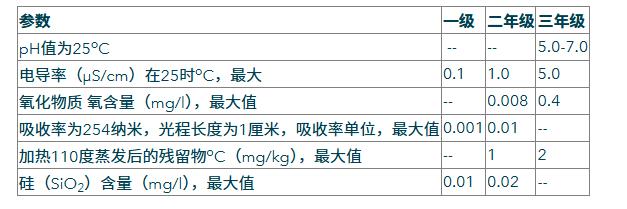
ISO의 규범은 ISO 3696: 1987에 근거하여 물의 세 등급을 규정한다: 1등급, 2등급, 3등급, 그중 1등급의 수질이 가장 순수하다(아래 참조).
ISO 등급의 수질 매개 변수
미국 재료 및 실험 학회(ASTM)
ASTM은 D1193-06 표준을 채택하고 있으며 네 등급의 물이 있습니다(아래 표 참조).

적합한 수질 청정 유형을 선택하다.
어떤 종류의 급수 시스템이 필요한지 알면 당황할 수도 있다.고객의 요구에 맞는 정화 시스템을 선택할 수 있도록 현지 영업 담당자가 있습니다.자세한 내용은 문의하십시오.
마지막 기사:하수 규정 준수 및 지속 가능성